
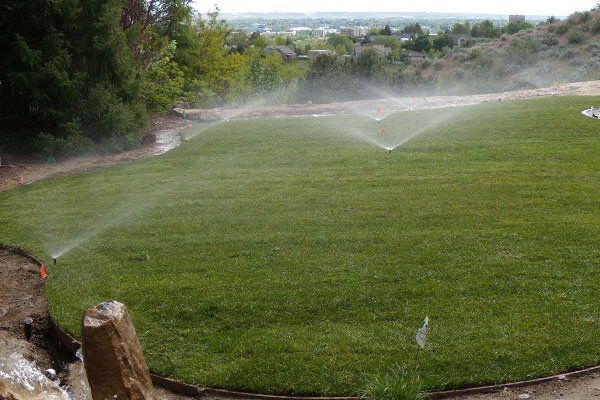
Irrigation Coverage Designed for Your Property
Sprinkler System Design and Installation in Boise for properties that need efficient water delivery without manual intervention
Irrigation systems installed without zone planning—running high-pressure spray heads alongside drip emitters, placing sprinklers where wind consistently blows water onto pavement, or sizing controllers without capacity for future expansion—waste water while leaving parts of the landscape under-irrigated. Stark Landscape Inc. designs and installs custom sprinkler systems that provide consistent irrigation coverage tailored to property layouts, plant water needs, and Boise's limited annual rainfall. When systems are planned before installation, properties avoid the pattern of dry zones in back corners, overwatered areas near structures, and controllers that lack flexibility for seasonal adjustments.
Design services involve site evaluation to document property dimensions, sun exposure, plant types, and soil drainage characteristics, followed by system layout that establishes irrigation zones based on water requirements and establishes component placement for reliable operation. Installation includes trenching for supply lines, placement of sprinkler heads and emitters according to approved plans, valve installation for zone control, and controller programming that establishes run times based on plant needs and seasonal conditions.
Request an irrigation evaluation to review current landscape water needs and receive a system design based on your property's specific layout.
Why Proper System Design Improves Landscape Health
Professional irrigation planning separates turf areas requiring frequent shallow watering from shrub and tree zones needing deeper, less frequent irrigation, accounts for sun exposure differences that cause south-facing slopes to dry faster than shaded north sides, adjusts sprinkler spacing to prevent wind drift common in Boise's afternoon conditions, and sizes supply lines to maintain adequate pressure across all zones without performance drops at the furthest heads. Systems designed with these factors reduce water waste while supporting healthier root development and more uniform landscape appearance.
After a properly designed system is installed, you notice that lawns maintain consistent color without brown patches indicating under-watering or fungal issues from over-watering, shrub and tree zones receive deep soaking that encourages root growth rather than surface watering that promotes shallow roots vulnerable to heat stress, and hardscape areas remain dry without overspray that stains concrete or promotes weed growth in cracks. Controllers allow zone-by-zone adjustments as seasonal temperatures change, providing flexibility without manual hose watering to compensate for system shortcomings.
Installation quality also determines system longevity, with properly placed components less prone to damage from mowers, foot traffic, or freezing temperatures that crack poorly drained lines left full of water through winter. Both residential and commercial properties benefit from irrigation systems that require minimal intervention once programmed correctly.
Questions Property Owners Ask About Irrigation Systems
Residential and commercial clients in Boise often want to know how systems are zoned and what factors affect water efficiency across different landscape areas.
How are irrigation zones determined during system design?
Zones separate areas with similar water needs, grouping turf separately from shrubs and trees, dividing sun-exposed areas from shaded zones, and isolating high-water plants from drought-tolerant species to allow independent scheduling that matches each area's requirements without over- or under-watering adjacent plantings.
What components are included in a professionally installed sprinkler system?
Systems include a controller that schedules zone operation, valves that control water flow to each zone, supply lines that distribute water from the main connection, sprinkler heads or drip emitters that deliver water to plants, and backflow prevention devices required by Boise municipal codes to protect potable water supplies.
Can irrigation systems be expanded after initial installation?
Systems designed with expansion capacity include controllers with unused zone terminals, supply lines sized for additional zones, and valve manifolds with space for future valves, allowing property owners to add irrigation coverage as landscape areas are developed without replacing existing infrastructure.
How does Boise's climate affect irrigation system design?
Low annual rainfall requires systems capable of meeting full landscape water needs during summer, alkaline soil common in the area affects water absorption rates and may require longer run times with shorter cycles to prevent runoff, and winter freezes necessitate proper system winterization to prevent pipe and component damage.
What maintenance does a new irrigation system require after installation?
Systems need seasonal startup in spring to check for winter damage, mid-season adjustments to run times as temperatures change, periodic inspection of sprinkler heads for clogs or misalignment, and fall winterization to drain lines and protect components from freezing temperatures.
Stark Landscape Inc. installs irrigation systems for properties throughout Boise, designing coverage that supports landscape health while reducing water waste. Arrange a consultation to discuss your property's irrigation needs and establish a system plan that delivers efficient water coverage from the start.